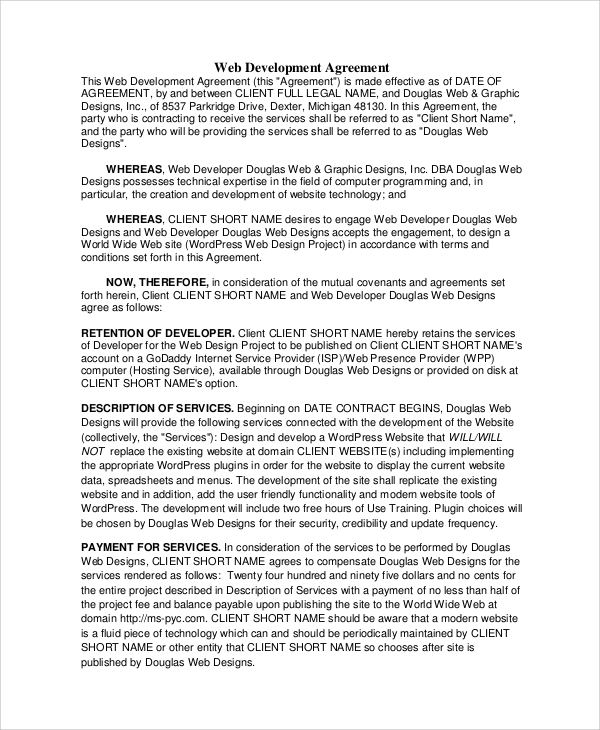
Website development is a crucial investment for any business looking to establish an online presence. However, the process can be complex, and clarity is paramount to avoid misunderstandings and potential disputes. That’s why a well-structured Website Development Agreement Template is essential. This document outlines the key terms and conditions between you and your web development partner, ensuring a smooth and legally sound collaboration. It’s more than just a formality; it’s a roadmap for a successful project. This template provides a solid foundation, and it’s highly recommended to have it reviewed by legal counsel to ensure it aligns with your specific needs and jurisdiction. Understanding the nuances of this agreement is vital for protecting your interests and maintaining a positive relationship with your developer. Let’s delve into the core components of a robust Website Development Agreement Template.
Understanding the Importance of a Template
Before we dive into the specifics, it’s important to understand why a Website Development Agreement Template is so valuable. Many projects involve multiple stakeholders – designers, developers, project managers, and clients – each with their own expectations and priorities. A clearly defined agreement minimizes these conflicts and establishes a shared understanding of responsibilities, timelines, and payment terms. It’s a proactive step that can prevent costly delays and disputes down the line. Furthermore, it provides a documented record of the agreement, which can be invaluable if disagreements arise. Ignoring the need for a template can lead to significant headaches and potential legal challenges.
Key Sections of a Comprehensive Agreement
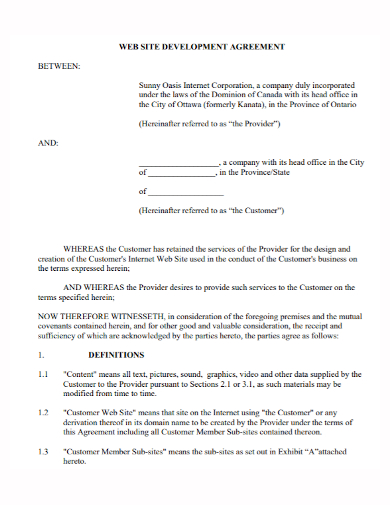
A robust Website Development Agreement Template typically includes the following sections:
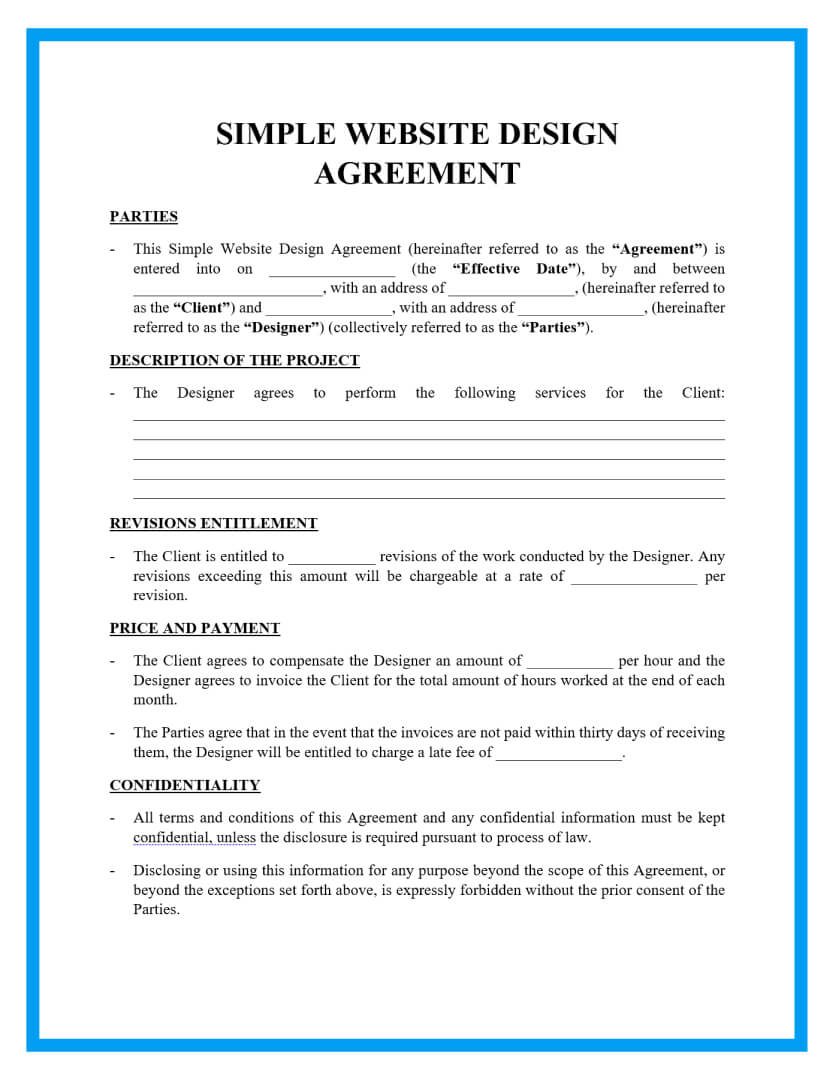
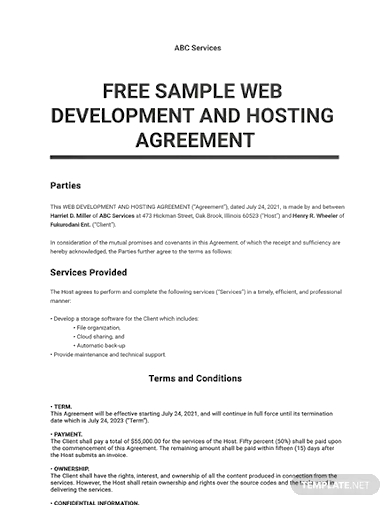
- Scope of Work: This section clearly defines the specific services to be provided. It should detail the functionalities to be implemented, the platforms to be used (e.g., WordPress, Shopify, custom-built), and the technologies involved. Be precise about what’s included and, crucially, what’s not included. For example, does the agreement cover hosting, domain registration, initial design, content migration, and ongoing maintenance?
- Payment Terms: This section outlines how and when payments will be made. It should specify the payment schedule, accepted payment methods, and any potential milestones or deliverables that trigger additional payments. Consider including clauses regarding late payment penalties.
- Timeline and Milestones: A detailed timeline is critical for project success. This section should outline key milestones, deadlines, and expected completion dates for each phase of the project. It’s helpful to include a Gantt chart or similar visual representation to illustrate the timeline.
- Intellectual Property: This section clarifies ownership of the website’s content, design, and code. It should address issues related to copyrights, trademarks, and the right to use the website for commercial purposes. A clear statement of ownership is essential.
- Confidentiality: This section protects sensitive information shared during the project. It should outline the obligations of both parties to maintain confidentiality and prohibit the disclosure of proprietary information.
- Termination Clause: This section details the conditions under which either party can terminate the agreement. It should specify the notice period required and any potential consequences of termination.
- Liability and Indemnification: This section addresses potential liabilities and ensures that each party is responsible for their own actions. It’s important to clearly define who is responsible for what in case of errors or omissions.
- Dispute Resolution: This section outlines the process for resolving disputes. It could include mediation, arbitration, or litigation. Choosing a clear dispute resolution mechanism can save time and money in the long run.
Website Development Agreement Template – Detailed Breakdown
Let’s examine a few key sections in more detail:
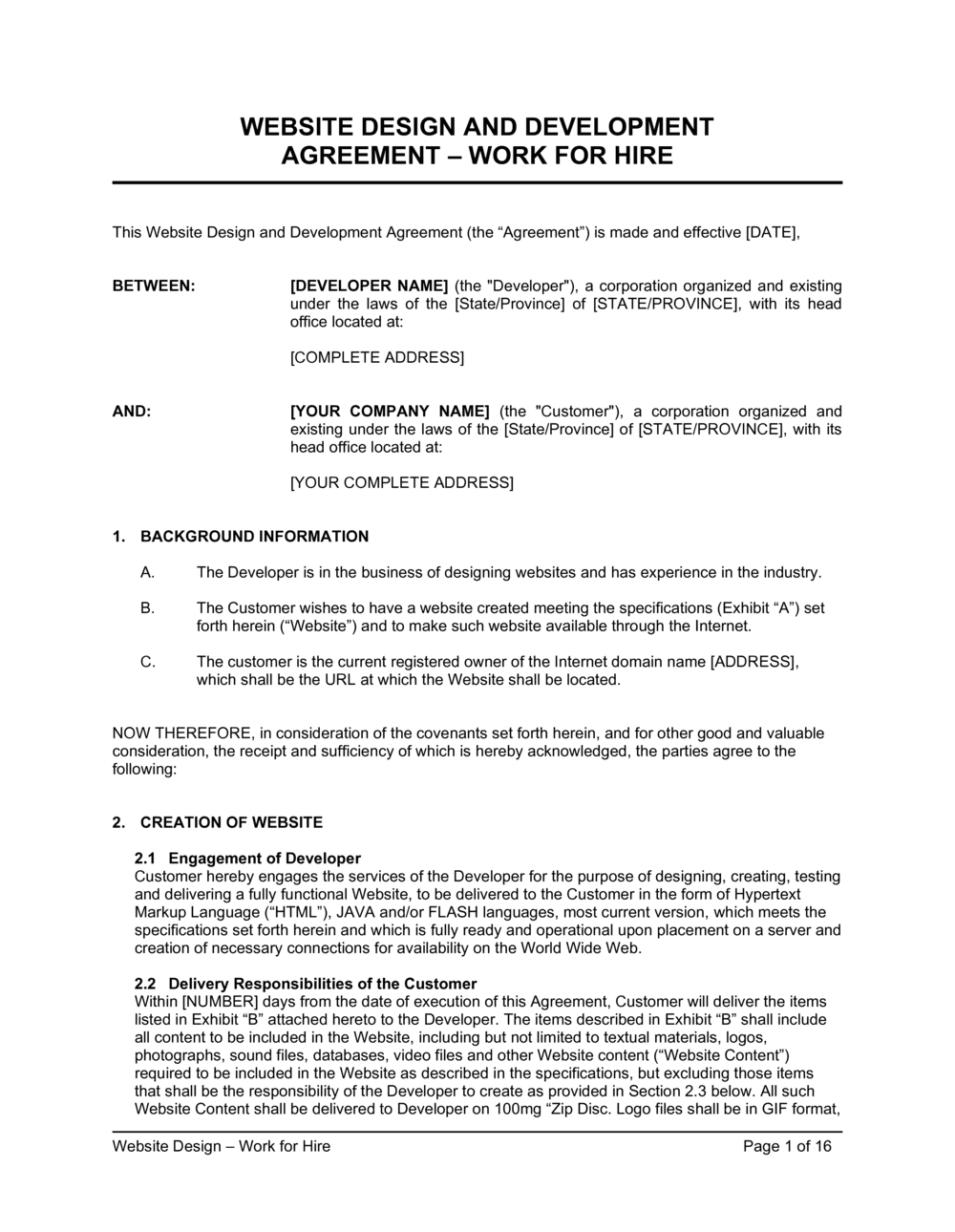
Scope of Work: A well-defined scope is the cornerstone of a successful agreement. It’s vital to avoid scope creep – where the project expands beyond the original agreement. Specifically, the template should clearly state:
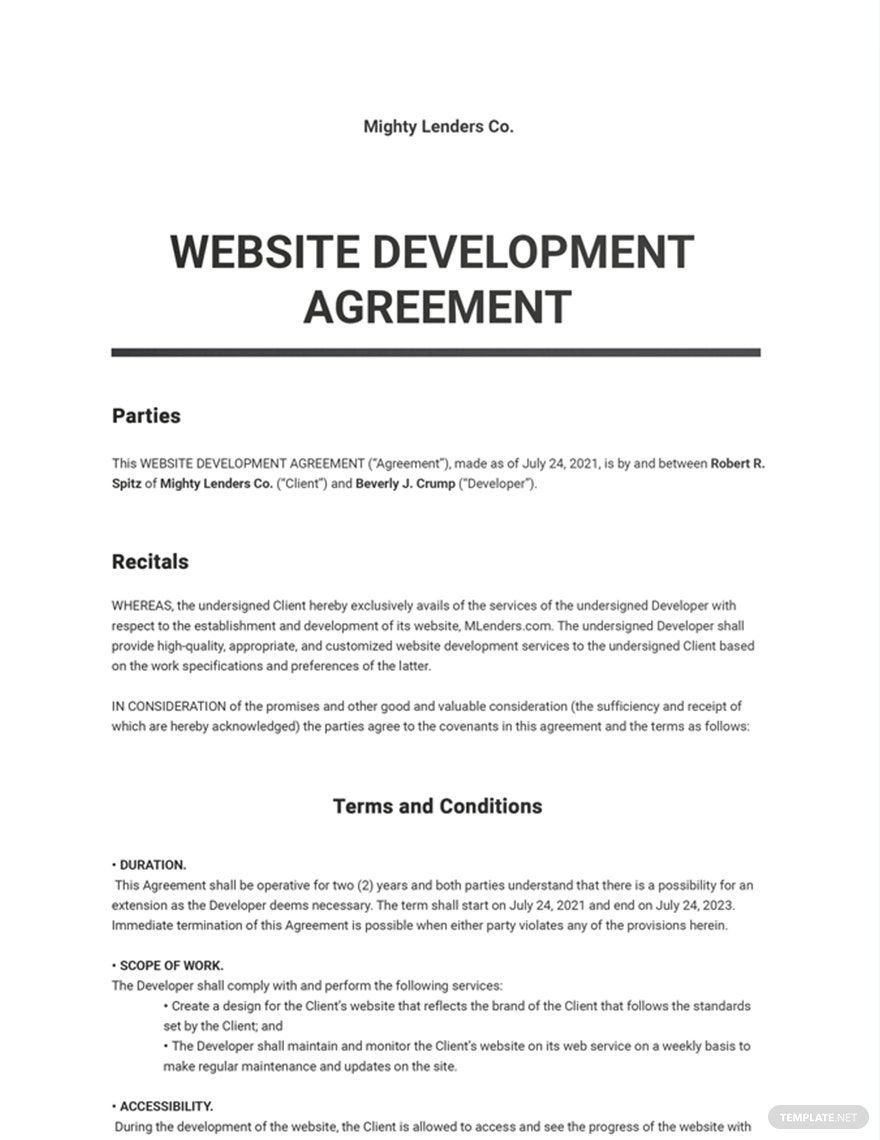
- Functionality: Detailed descriptions of the website’s features and functionalities.
- Content: Specify whether the client will provide content, and if so, the type and volume of content.
- Design: Outline the design requirements, including branding guidelines, color palettes, and overall aesthetic.
- Platforms: Specify which platforms the website will be built on (e.g., WordPress, Shopify, custom-coded).
Payment Terms: Transparency is key. A typical agreement will include:
- Initial Deposit: A percentage of the total project cost to secure the agreement.
- Milestone Payments: Payments based on the completion of specific milestones (e.g., design approval, content migration).
- Final Payment: The remaining balance upon project completion and successful launch.
Intellectual Property: This section is crucial for protecting your brand. It should include:
- Ownership of Design: Clearly state that the client owns all intellectual property rights to the website’s design.
- Copyright Protection: Require the developer to register copyrights for any original designs or code.
- Use of Website: Restrict the client’s use of the website for commercial purposes.
Best Practices for Using a Template
- Customize: Don’t just use the template as is. Tailor it to your specific project needs and circumstances.
- Review Carefully: Thoroughly review the agreement before signing it.
- Seek Legal Advice: Consult with an attorney to ensure the agreement is legally sound and protects your interests.
- Keep a Copy: Maintain a copy of the agreement for your records.
Conclusion
A well-crafted Website Development Agreement Template is an invaluable tool for any business involved in website development. By clearly defining the scope of work, payment terms, and intellectual property rights, you can minimize risks, foster collaboration, and ensure a successful project. Remember that this agreement is a starting point – it should be adapted and refined as needed throughout the project lifecycle. Investing the time and effort to create a comprehensive agreement will undoubtedly pay dividends in the long run. Ultimately, a solid agreement provides a framework for a positive and productive relationship with your web development partner, leading to a website that meets your business goals and exceeds your expectations.
0 Response to "Website Development Agreement Template"
Posting Komentar